

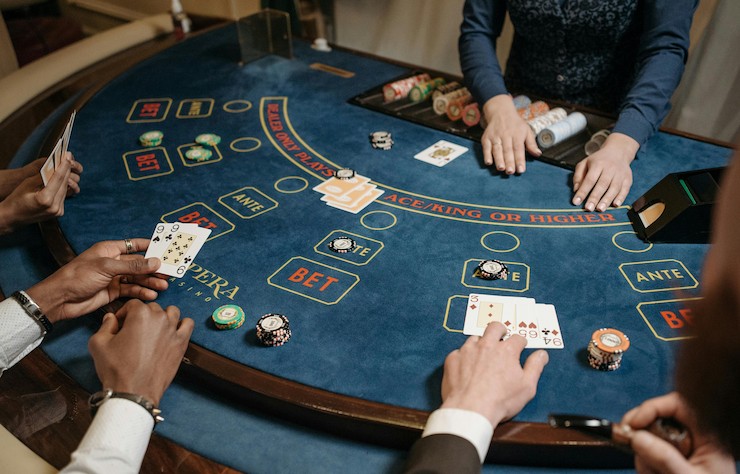
If you treat baccarat as entertainment, the goal is not to squeeze profit from the game but to buy a specific amount of fun without unplanned financial or emotional cost. The way you allocate time and money determines whether baccarat feels like a night out at the movies or slowly turns into something that competes with bills, sleep, and attention.
Why “Entertainment-Only” Needs Clear Limits
Calling something “just for fun” often becomes an excuse to skip structure, but gambling without limits tends to drift away from entertainment over time. Surveys and responsible gambling advice repeatedly show that when people do not pre‑budget gambling, they start topping up from general spending, which undermines long‑term financial goals. Baccarat’s fast pace intensifies this dynamic because many hands fit into a short period, so a casual session can quickly exceed the money and time you originally imagined.
A clear entertainment frame therefore needs hard edges: a maximum amount of money that can be lost without consequences and a defined time window after which you stop regardless of results. Those constraints preserve the original purpose of the activity by preventing it from expanding into areas of your life—savings, work performance, family time—that were never meant to be involved.
Start From Your Overall Budget, Not From the Table Limits
When you approach baccarat as entertainment, the starting point should be your monthly budget, not the minimum stakes advertised. Personal finance guidance often suggests that discretionary “fun” spending, including gambling, should only come from the portion of income already set aside for non‑essential wants. If you follow a framework where needs, savings, and debt are covered first, whatever is left for leisure can be divided between restaurants, travel, hobbies, and any gambling you plan to do.
This top‑down approach has a direct protective effect: baccarat never touches rent, food, or savings because it only uses funds allocated for fun. If your discretionary pool is small in a given month, your baccarat budget shrinks accordingly instead of pulling money from more important categories. That way, the game remains in the same mental bucket as other entertainment options, competing honestly with them instead of invisibly displacing essentials.
Translate Your Entertainment Budget Into a Baccarat Bankroll
Once you know how much of your fun money you’re willing to spend on baccarat, the next step is to convert that number into a structured bankroll. Baccarat bankroll guides typically recommend separating a dedicated gambling fund from the rest of your finances so it can be tracked and managed independently. Within that fund, many sources suggest that no single session should risk more than about 10% of the total, so a rough run cannot wipe out your entire monthly allowance at once.
From there, you can define bet units as a small percentage of your session bankroll—often in the 1–5% range—so you can weather inevitable losing streaks without immediate bust‑outs. For example, if you allocate 2,000 units of your entertainment budget to baccarat for the month, you might set four sessions of 500 units each and play with 10–20 units per hand. This structure anchors every stake size in a broader context and keeps the pace of losses aligned with what you decided was affordable for fun.
Table: turning monthly fun money into a baccarat plan
| Monthly Fun Budget | Portion for Baccarat | Suggested Sessions | Session Bankroll (10% of baccarat fund per session) | Typical Bet Size (2–5% of session) |
| 5,000 units | 2,000 units | 4 | 500 units | 10–25 units |
| 10,000 units | 4,000 units | 6 | ~650 units | 15–30 units |
| 15,000 units | 6,000 units | 8 | ~750 units | 15–35 units |
This kind of table forces a concrete link between your overall leisure budget and what happens at the table. You can see how changing the portion allocated to baccarat, the number of sessions, or the unit size immediately affects how many hands you can expect to play and how severe a losing night can be, which is central if your goal is steady enjoyment rather than high‑stakes swings.
Use Time Blocks to Keep Play From Spilling Into the Rest of Your Life
Money is not the only resource you risk at the table; time and mental energy are just as important when baccarat is meant to be a hobby. Strategy and responsible‑play guides underline that the longer you sit, the more opportunities the house edge has to manifest, and the more fatigue can push you into decisions you would normally avoid. Without time limits, what starts as “a quick session” can turn into hours, especially online where there is no physical closing time.
A practical entertainment‑focused rule is to treat baccarat sessions like scheduled events: block a window of, say, 60–90 minutes, start a timer when you begin, and commit to stopping when it goes off, regardless of whether you are up or down. Combining this with your bankroll structure—one bankroll per time block—forces you to choose between extending the session (which you avoid) and choosing another day. The impact is more sustainable: the game fits around your life instead of life being rearranged around the game.
Match Table Speed and Stakes to the Kind of Fun You Want
Entertainment value depends not just on how much you spend, but on how that spending feels. Live or slower online tables with lower minimums may deliver more hands and more time for a given budget than high‑speed, high‑limit variants, which can burn through your session bankroll quickly. If your goal is relaxed enjoyment rather than adrenaline spikes, choosing slower formats and modest table limits makes each unit of your budget buy more minutes of engagement.
In practical terms, that might mean avoiding turbo modes or high‑roller rooms even if your bankroll could technically handle them. A steady flow of smaller decisions gives you time to notice fatigue, boredom, or creeping frustration—signals that entertainment value is dropping. Aligning game speed and stakes with the experience you want prevents entertainment sessions from becoming stressful, which is the point where the activity no longer matches its original purpose.
Keep Baccarat in Its Own Mental and Financial Box
When baccarat is “just for fun,” it is crucial that losses stay conceptualized as entertainment spending, not as something you must get back. The moment losses feel like a problem to be solved, the activity begins to drift toward income replacement or emotional coping, which dramatically increases risk. Clear separation—using a dedicated account balance, e‑wallet, or even a cash envelope—helps maintain that mental boundary.
Some players use digital tools to reinforce this separation. Many operators and financial apps allow you to set deposit limits, loss limits, or monthly caps dedicated to gambling, which stops you from casually adding funds after a bad run. Treating those tools as guardrails rather than obstacles keeps your entertainment budget from silently expanding, and it also makes it easier to review your behavior over time, since all baccarat‑related activity is visible in one place.
Situational Use of Online Services Without Changing Your Rules
For many people, the most accessible way to treat baccarat as a light hobby is through digital services that can be accessed from home, but the convenience cuts both ways. Because online tables are available at any hour, strict adherence to your pre‑set time and money limits becomes even more important—there is no external closing time to force a stop. One productive approach is to treat your login as the start of a pre‑planned session, not as an open‑ended activity, and to log out completely when either the time block or session bankroll is finished.
In some routines, baccarat sits within broader digital ecosystems that also host sports betting and other games, and the same entertainment rules should govern all of them. When that ecosystem is an established คาสิโนออนไลน์ website you already use, the rational step is to configure its available tools—deposit caps, reminders, optional cooling‑off periods—so they mirror your external budget and time blocks instead of working against them. That alignment ensures that the convenience of online access serves your entertainment goals rather than making it easier to quietly exceed them.
Recognise When “Entertainment-Only” Has Quietly Changed
Even with thoughtful budgeting, there are signs that baccarat may no longer function as simple entertainment. Red flags include extending sessions to recover losses, regularly exceeding your fun‑money allocation, feeling pressure to win to cover unrelated expenses, or thinking about the game during work hours in a way that distracts from responsibilities. Each of these shifts indicates that the game’s role in your life is changing from optional pastime to source of stress or pseudo‑income.
Treating these signals seriously is part of protecting your original intent. If you notice them, the logical response is to pause play—perhaps for a set period—re‑examine your budget, and consider whether your current limits are strict enough or whether you need outside support or tools to reinforce them. Doing this early keeps baccarat within the boundaries you designed, so you can either continue enjoying it on your terms or walk away before it starts impacting areas you never meant to put at risk.
Summary
Baccarat can function as entertainment only when time and money are constrained deliberately rather than incidentally. By starting from your overall budget, carving out a dedicated fun‑money slice, converting that into session bankrolls and modest betting units, setting firm time blocks, choosing slower and lower‑stakes environments, and watching for early signs that the game’s role is changing, you keep the experience aligned with leisure instead of pressure. Under those conditions, every session becomes a planned cost for a finite amount of enjoyment rather than an open‑ended risk that quietly competes with your financial and mental wellbeing.